 bg
bg
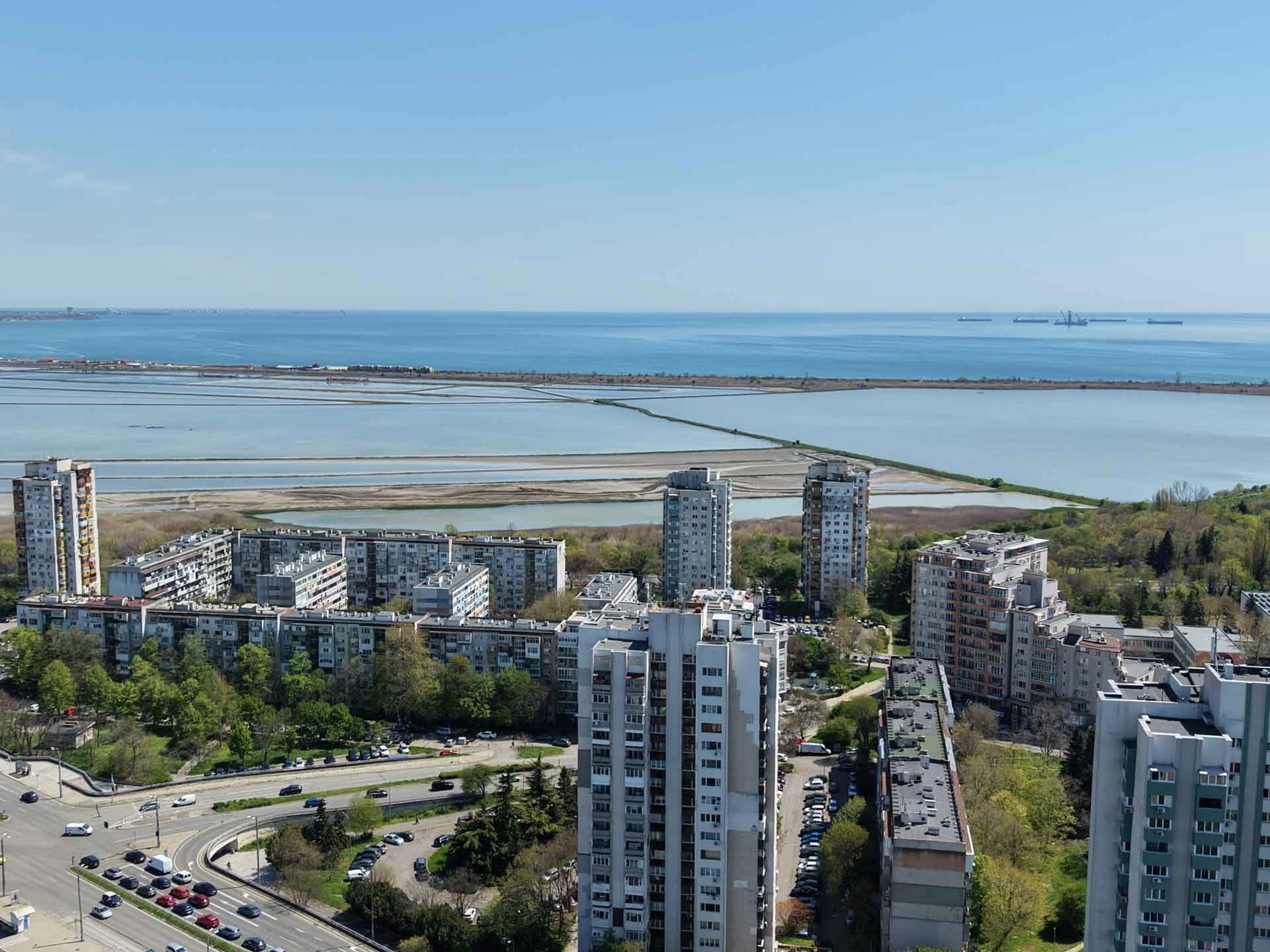
In brief
Year-round life in Burgas is a practical choice in 2026: homes are noticeably more affordable than in Sofia, everyday costs are lower, and the city has hospitals, schools, an airport and year-round infrastructure. The main trade-off is the smaller local job market - remote work is one of the ways it can be offset. The right order is a test out of season, renting in the chosen area, and only then a purchase.
Why are people moving from the big cities to Burgas?
Three reasons drive the wave: remote work, the difference in home prices and the quality of everyday life. Once the office stopped being a compulsory destination, choosing a city became choosing a way of life - and the sea began to win out over traffic.
The financial case is the first argument. According to public market reviews from 2026, new construction in Burgas runs at roughly 1,300 to 2,000 euro per square metre in most areas - against levels in the central and prestige parts of Sofia that the same reviews put above 4,000 euro per square metre. The figures are indicative and shift by area, but the direction is unambiguous: with the budget for a one-bedroom in the capital, in Burgas you buy a two-bedroom in a good building - or a one-bedroom plus income from a property investment.
Everyday life adds arguments: a compact city where most daily routes are measured in minutes, a sea garden instead of a boulevard, the beach before or after work from late spring to autumn.
What is Burgas like out of season?
Burgas is a year-round city, not a resort - this is the key difference from Sunny Beach, Sozopol or Nessebar, which fall quiet in October. The city has a permanent economy: a port, an airport, industry, commerce, administration, universities.
Winter is mild compared with the country's interior, but windy - the maritime climate makes itself felt. The cultural calendar does not stop: theatre, opera, concerts, festivals and venues run year-round. The Sea Garden and the coastal walkways are full of runners and strollers even in January.
The honest answer on the downsides: from November to February the city is visibly quieter, the choice of events is smaller than the capital's, and some seafront venues close. For some this is a drawback, for others exactly the calm they were after.
How much does life in Burgas cost in 2026?
Life in Burgas is noticeably cheaper than in Sofia across the three main items: housing, transport and everyday expenses. The difference in housing is the biggest.
Buying a home
The range is wide - per the public reviews, roughly from around 1,300 euro per square metre in the more outlying neighbourhoods to over 3,000 euro on the seafront. Quality new construction in the established residential areas sits in the middle of this range - with energy class A, a parking space and new installations that the old housing stock does not offer. Check the current levels for the specific area - the market keeps moving.
Rents
The average rent for a one-bedroom apartment in Burgas is around 450 euro a month, per market reviews from early 2026 - against 600-700 euro for a similar home in Sofia. Many people move to a rental first for a year before buying - a sensible way to get to know the neighbourhoods.
Everyday expenses
Transport is cheaper by nature: distances are short, many people walk or cycle, and one car per family is often enough. Heating and cooling bills depend heavily on the building - in a well-built home with a high energy class the costs can be noticeably lower, but the result depends on the orientation, the floor area, the systems and the household's habits.
Food, services and dining out are in many cases more affordable than the capital's, though the difference narrows in the tourist zones in summer and depends on individual habits. The overall effect on a family budget: a household that retains a Sofia-level income while paying Burgas-level living costs will usually notice the difference in its monthly budget - and it is exactly this that funds the better home or earlier repayment of the loan.
Which areas of Burgas work for year-round life?
The strongest options for year-round living are neighbourhoods with complete everyday infrastructure: the city centre, Izgrev, Zornitsa, Lazur and Slaveykov. The choice between them is a matter of budget and rhythm of life.
The centre
The centre puts everything within walking distance: work, schools, venues, culture, the Sea Garden. New construction here is limited and in demand - the plots are few, and the old buildings rarely offer parking. This supports both the prices and the liquidity of the quality new buildings.
For a moving family the centre has one more advantage that shows after the first year: the shortest path to new social circles. School, sport, work meetings and evenings with friends all happen within a kilometre - and that speeds up the "we're home" feeling more than anything else.
Izgrev and Zornitsa
Izgrev is among the most sought-after residential areas in the city: wide spaces between the blocks, schools, kindergartens, shops and a quick link to both the centre and the northern beaches. It is no accident that the area concentrates a large share of the city's new construction - the reasons we set out in detail in the article on Izgrev and new construction.
Near the Sea Garden
Lazur and the northern part of the centre put the sea a few steps away - at the cost of higher levels per square metre. For people who moved for the sea, this premium is often justified: the park and the shore become part of daily life, not a weekend destination.
A comparative breakdown of the Burgas neighbourhoods, with benchmarks for prices and the type of construction, can be found in the article on neighbourhoods and prices in Burgas new construction, maintained by the developer TV Property.
What to check in a home near the sea?
The maritime climate is merciless to poor construction - salt, moisture and wind wear out facades, windows and metal elements noticeably faster than in the country's interior. When choosing a home by the sea, check:
• The facade and materials: how the metal elements are protected, the quality of the thermal insulation and the render.
• The windows: the sealing class and wind resistance - on a high floor facing the sea the difference is heard and felt.
• Ventilation and moisture: bathroom and cellar free of traces of condensation and mould.
• Orientation: the northern wind in winter and the afternoon sun in summer decide the comfort of the terrace.
Which materials and solutions stand up to the salty environment and how to recognise them at a viewing we set out in the article on the maritime climate and new construction. In older buildings these checks are critical; in new ones they come down to a reputable developer and the right materials from the very start.
Work, schools and healthcare: the practical questions
The job market is smaller than Sofia's - this is the main trade-off in the move. Remote work is one of the possible ways to offset it, when the income is secured before the move. The other routes are local employment in tourism, logistics, port activities and services, or your own business - the choice depends on the family's profession and plans.
Schools and kindergartens cover the whole city, with the widest choice in the established residential areas. Burgas has universities, a language school and a mathematics high school with a long-standing reputation.
Healthcare is at the level of a regional centre: hospitals, emergency care, private clinics and laboratories. The airport in Sarafovo keeps the city 40-50 minutes' flight from Sofia and on direct routes to Europe for most of the year.
For families with children the transition is usually easier than expected: the shorter distances mean children reach school and training on their own sooner than in the capital, while the sea and the park replace much of the paid activities. Conversations with families who have moved are worth more than any article - seek them out in the neighbourhood you are considering.
Why Burgas rather than Varna or the small seaside towns?
Burgas wins the comparison for year-round life with a combination the other coastal options cover only in part: compactness, full urban infrastructure and affordable prices at the same time.
Burgas or Varna
The two large seaside cities are both legitimate options, and the choice is often a matter of personal ties. The objective differences: Burgas is more compact, with short daily routes, while Varna is more spread out and has heavier traffic. The housing markets are comparable; in Varna's active areas demand includes a noticeable investment component that keeps prices higher. Varna offers, in return, a larger job market and a bigger student population.
Burgas or Sozopol, Nessebar, Pomorie
The small seaside towns offer more romance at a lower price - but they are seasonal creatures. In winter life shrinks noticeably: fewer venues open, a limited choice of schools and doctors, most neighbours seasonal. For a holiday home they are an excellent choice; for year-round life with a family and children the trade-offs are structural. So one sensible model is a home in Burgas and the sea across the whole bay at the weekends - the towns along the southern coast are a short drive away.
Taxes and running costs: what does the owner pay in Burgas?
The owner's annual costs in Burgas are modest against the price of the property - and this is part of the calculation of the move. The property tax and the waste-collection fee are set by the municipality on the tax valuation and are usually in the order of a hundred to a few hundred euro a year for a family home - check the specific rates with the municipality. Add home insurance and the common-area service charge in a new building with a lift, parking and access control.
Against the service charge in a new building stands a real service: a maintained entrance, working lifts, lit and clean common spaces, snow clearing and garden upkeep where there is a yard. In older buildings this charge is lower or absent - along with the service.
How to organise the move: 5 steps
A move to another city most often fails because of a rushed purchase in the wrong place. The order that works is:
1. Test with a stay out of season: a week in November or February tells you more than a month in August.
2. Choose the area around your daily life: walking distance to work and school weighs more than the view.
3. Rent for 6-12 months in the chosen area before you buy - the cheapest insurance against a wrong choice.
4. Review new construction by construction stage: buying at an earlier stage gives a better price and time to plan.
5. Buy once the area is proven by your own experience, not by listings and photos.
The first year in Burgas: what surprises the movers?
A few things usually surprise the movers - and it is better to keep them in mind before, not after, moving in.
The wind is the typical first surprise: the sea breeze, a blessing in August, is a serious factor in January. A home with good windows and insulation makes the difference between "I notice it from the terrace" and "I feel it in the living room" - and this is the practical argument for looking at the energy class, not the number of sunny days in the brochure.
The second possible surprise is a pleasant one: how quickly you gain time. The time the capital's traffic eats up largely stays for living in Burgas - for many, exactly this, rather than the sea, turns out to be the change they would not undo.
The third is social: your circle of acquaintances is built anew. The city is relatively open - the school, the sports clubs and the neighbours in the new buildings, where a large share of the residents have also arrived recently, help this happen faster. A building with an active community of year-round residents makes settling in easier - one more argument for the choice of building to weigh as much as the choice of neighbourhood.
And one practical detail about summer: in July and August the city is fuller, parking around the beach zones is a challenge, and your favourite venue has a queue. Year-round residents learn to live with the city's rhythm - and to use the sea in the morning, before the beach wakes up.
When is Burgas not the right choice?
Burgas is not for everyone - and it is fair to say so plainly. The city will disappoint you if your career requires a physical presence in a Sofia-style corporate office, if you rely on the capital's weekly calendar of events, or if you expect a resort summer twelve months a year.
Everyone else gets a deal the capital cannot offer: the sea in daily life, short distances, a lower cost of living and a home at a price that leaves a reserve in the family budget.
Checklist: 12 checks before you choose a home in Burgas
Gather the answers in one place before you sign anything - this is the difference between a planned move and improvisation. For the area, check:
• how many minutes on foot the school, kindergarten, shop and stop are from the specific entrance, not from the neighbourhood in general;
• what the area looks like on a weekday January evening - lighting, people, venues open;
• where you park - a guaranteed space in the building or a hunt for a spot on the streets;
• how long the real route to work or to the airport takes in the rush hour.
For the building and the home:
• the energy class and the real bills of a neighbour with a similar home, if possible;
• facade, windows and metal elements suited to the maritime environment;
• orientation relative to the northern winter wind and the summer afternoon sun;
• traces of moisture and condensation in bathrooms, cellars and common areas.
For the deal and the budget:
• the full monthly bill: instalment or rent plus fees, tax, insurance and upkeep;
• a buffer for unforeseen costs after the move;
• a clear plan for the current home - sale, letting or keeping it;
• agreed move-in dates, aligned with the school year for children.
Piccadilly Residence: a home designed for year-round life
Piccadilly Residence is designed for exactly the profile of the year-round resident: apartments in Burgas with functional layouts, energy class A against the maritime winter and the hot summer, underground parking and a quality facade suited to the seaside environment.
Review the available apartments with current prices or book a viewing - on site the team shows the area too, not just the building. For families planning a move, that is often the more valuable part of the viewing.
Questions from moving families
Can you live in Burgas year-round?
Yes. Burgas is a regional city with a permanent economy - a port, an airport, industry, universities - not a seasonal resort. Schools, hospitals, culture and commerce run year-round. Winter is mild but windy; the city is quieter from October to April, which for many families is an advantage rather than a drawback.
How much does an apartment in Burgas cost in 2026?
Roughly between 1,300 and 2,000 euro per square metre for most areas, per public market reviews from 2026, and on the seafront - over 3,000 euro. New construction in an established residential area with a parking space and class A sits in the middle of the range. The figures are a guide, not an offer - check the current prices for the specific project.
Which area of Burgas is best for a family with children?
Izgrev, Zornitsa and Slaveykov offer the best balance: schools and kindergartens in the area, wide spaces, shops and a quick link to the centre and the beaches. The centre wins if you want everything on foot, provided the budget allows and parking is solved with the building.
Can you find work in Burgas?
The local market is smaller than Sofia's and concentrated in tourism, logistics, port activities and services. Remote work is one possible way to offset this trade-off when the household's income is secured before the move, not after it.
When is the best time of year to move?
The practical window is September to October: the summer rush is over, the long-term rental market opens up, the schools start and the family settles into the city's normal rhythm from the first month. Moving in June gives you the summer to acclimatise, but demand for homes and services is then at its most expensive and most competitive.
Is it cheaper to live in Burgas than in Sofia?
Yes, across all the main items. Homes are noticeably more affordable per square metre in the public market reviews, rents are roughly a third lower, and the short distances save transport costs and time. The difference allows a family that retains a Sofia-level income while paying Burgas-level living costs to enjoy more room in its monthly budget.