 bg
bg
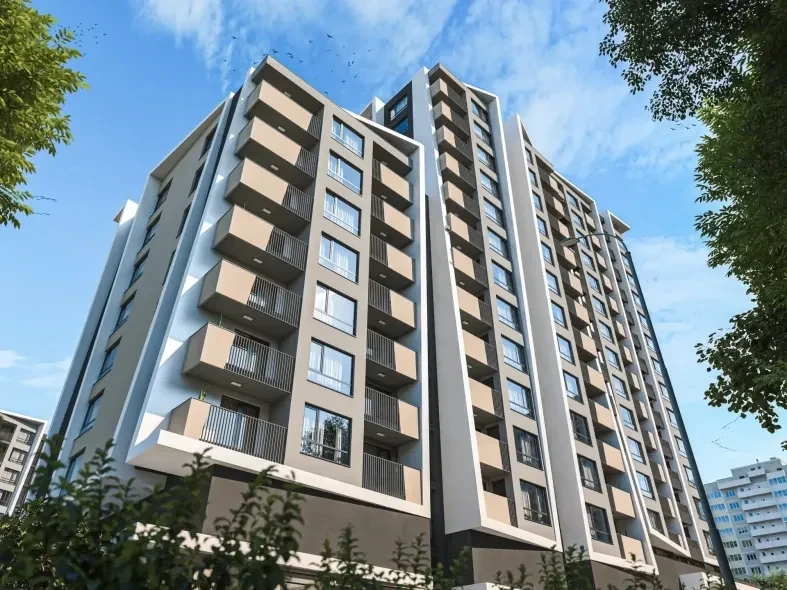
With ground-level homes, three issues matter most: how the outdoor area is actually arranged in the documents, how light and privacy work in real life, and whether the building addresses security, access and the technical details around the contact with the ground properly. That is why this type of property should never be judged by the visual presentation alone.
What a garden apartment really means
In practice, this is a ground-level apartment connected to a dedicated outdoor area for individual use. In different projects, that link may be described in different ways - in the contract, in the title deed, in the architectural design or in the building rules. That is why the phrase “private garden” should always be interpreted through the documents, not only through the sales wording.
How it differs from shared landscaped areas
Shared landscaped areas are intended for all owners and occupiers in the building. A garden apartment, by contrast, is linked to a clearly delimited zone serving one specific dwelling rather than functioning as a common environment for everyone. This is exactly where documentary clarity matters - where the common area ends and how the space connected to the specific apartment is defined.
Why the documents matter more than the brochure
Expressions such as “private green garden”, “exclusive outdoor area” or “ground-level home with its own yard” sound appealing, but their real meaning is determined by the contracts and design documentation. If the garden is not described clearly enough, disputes may later arise over boundaries, access, maintenance and the way the space may be used.
What to review before you buy
This type of property usually calls for a more detailed review than a standard apartment. The goal is simple: to know exactly what you are buying and how the outdoor area will actually function in daily life.
The preliminary contract and property description
The preliminary contract should not describe only the apartment. It should also define the outdoor area with enough clarity - indicative size, location, access and its relationship to the dwelling. If the garden is one of the main reasons you are buying that specific unit, it should not sit outside the core contractual wording.
Architectural design and layout
The approved design shows how the ground-level zone is organised, where the pedestrian paths run, where the common circulation areas are and how the separation between the apartment and the shared parts is resolved. This becomes especially important when privacy is part of the value proposition, because a poorly planned garden may turn out to be too exposed to paths or neighbouring entrances.
Rules of use and maintenance
It is worth understanding in advance who maintains the paving, lawn, fencing and any additional landscaping. Some projects have clear rules on what is allowed and what is not - for example outdoor furniture, lightweight structures, changes to paving or extra planting. These details often seem minor only until you begin using the space every day.
The practical advantages
Easier access and a more flexible routine
When you have direct access to an outdoor area, moving with a stroller, a bicycle, a pet or shopping bags becomes easier. It is the kind of convenience you feel every day, not just during the viewing.
A better fit for families and pet owners
For families with small children, the garden creates a useful transition zone between the apartment and the city outside. For people with pets, it adds practicality that is difficult to achieve in a standard apartment without outdoor space. That is one reason these homes often appeal to a more clearly defined buyer profile.
A stronger sense of space
In a well-designed project, the garden is not just an add-on. It works as a natural extension of the living area. That can visually and functionally enlarge the home and often becomes one of the strongest purchase arguments.
The most common concerns
Light and privacy
There is no universal answer here. A well-oriented apartment with a garden facing a more open part of the plot may feel better than a higher-floor unit with a weaker layout. On the other hand, if the outdoor area is too compressed between buildings, the sense of openness is reduced. The best test remains a real on-site viewing at different times of day.
Security and access
In contemporary projects, the answer is rarely found in the apartment alone. It depends on the building concept as a whole - controlled access, well-lit common areas, clear entry and exit points and a predictable environment around the garden. When the perimeter is well organised, the risk is assessed very differently from that of an old and unprotected ground-floor dwelling.
Ground-level execution
In new construction, the real issue is not simply whether the apartment sits at ground level, but whether the project and execution have been done properly. It is entirely reasonable to ask the developer about the waterproofing, thermal insulation and the detailing around the connection between the interior floor, the outdoor area and the façade.
How the garden affects price and resale appeal
A garden apartment is not priced in exactly the same way as a standard mid-floor unit. The market sees it as a more niche product, but also as a more distinctive one. That means interest often comes from a specific group of buyers - families, pet owners or people looking for some of the feel of a house within an urban development.
From a resale and rental perspective, the decisive factors are not only the square metres, but also the quality of the outdoor area itself: whether it is properly separated, whether it is genuinely usable and whether it adds convenience rather than compromise. When the garden is well designed, it creates differentiation and often attracts faster interest from the right type of buyer.
How the topic looks in the context of Piccadilly Residence
Based on the project presentation, Piccadilly Residence is planned as a mixed-use building in Izgrev with apartments, parking spaces, a retail zone and homes with their own green gardens. The building page also lists underground and above-ground parking, bicycle zones, green roofs, sound insulation, triple glazing, KOMMERLING PVC joinery, a smart intercom system and average ceiling height of 2.90 m. This combination matters because, with a garden apartment, the outdoor area does not work on its own. It works best when the wider standard of the building supports it. When the exterior space is part of a well-conceived project, it has a much better chance of being perceived as a genuine convenience rather than a marketing add-on.
Useful internal pages: the building page, the apartments section and the article on mixed-use, reception and retail.
Frequently asked questions
Is a garden apartment cheaper than an apartment on a higher floor?
Not necessarily. Sometimes the price per square metre of the dwelling itself is positioned differently, but the outdoor area adds value and makes the product more specific.
Does a garden automatically mean full independence?
No. The use arrangement should be checked in the documents and the project itself. That is where you can see how the area is separated and what rules govern its use.
Is moisture or waterproofing a real concern with ground-floor apartments?
It can be a concern in poorly executed buildings, but in well-designed new construction the key issue is how the ground-level slab, waterproofing and insulation are detailed and executed. Before buying, ask for the technical specification and the warranty terms for the relevant layers and systems.
Can this type of property work well for rental purposes?
Yes, especially when it appeals to families or tenants looking for more outdoor space. The key factors remain the location, the building quality and the actual functionality of the garden.